
Flooded roads are a common hazard, and even shallow water can be dangerous – we have seen this recently in Dubai. Even driving through a puddle at high speed can result in water being sucked into the engine, flooding the ignition and electronics (such as the alternator or control computer), damaging the brake discs or exhaust system components such as the turbocharger, DPF filter or catalytic converter. But what if you are planning a car trip when there is a high probability of severe weather, floods and flooding? This article outlines the risks of driving through floodwater and provides crucial safety tips to keep you and your car protected.
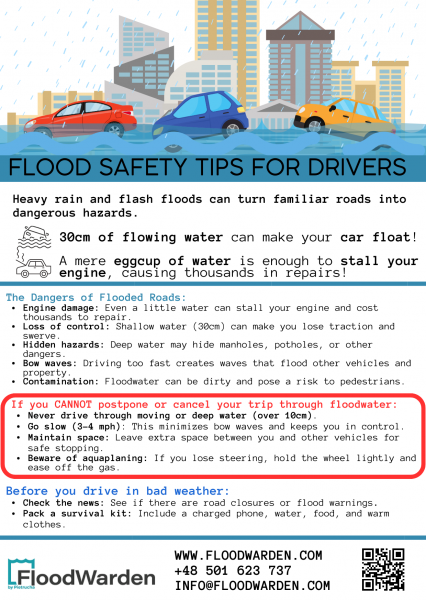
The Dangers of Floodwater:
- Engine damage: Just a small amount of water entering the engine can cause it to stall and lead to expensive repairs.
- Loss of control: As little as 30cm of flowing water can cause a vehicle to lose traction, increasing the risk of accidents.
- Hidden hazards: Flooded roads can conceal dangers like potholes and missing manhole covers.
- Contamination: Floodwater can be contaminated with debris or sewage, posing a risk to pedestrians and property.
Before You Drive:
- Check the weather: Stay informed about local flooding and road closures through news bulletins and weather forecasts.
- Consider alternatives: If possible, avoid driving altogether during heavy rain or flooding.
If You Encounter Floodwater:
- Turn back: Never attempt to drive through moving water or water deeper than 10cm.
- Assess the depth: If you must proceed through standing water, ensure it’s shallow enough to avoid engine intake.
- Drive slowly: Maintain a low speed (3-4 mph) to minimize bow waves and avoid creating hazards for others.
- Maintain space: Increase following distance due to longer stopping distances in wet conditions.
- Beware of aquaplaning: If you lose steering control, hold the wheel steady and ease off the accelerator to regain traction.
Be Prepared:
- Emergency kit: Pack a charged phone, water, food, and warm clothes in case you get stranded.
Remember: Floodwater can be deceivingly dangerous. When in doubt, turn around and don’t risk your safety or your vehicle.